
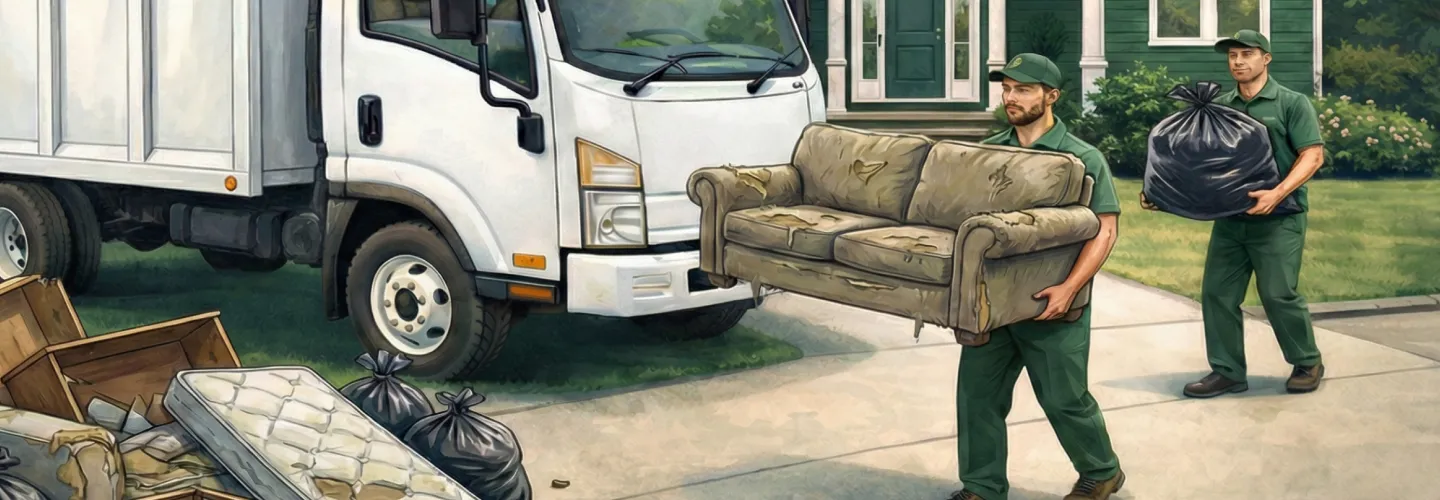
Easton Appliance Removal Services
Choose us for hassle-free appliance removal—our experienced team ensures safe, eco-friendly disposal and same-day service, making it easy to clear out your unwanted appliances with confidence.
Get a Free QuoteOur Easton Junk Removal Services
Appliance Removal in Easton , MA – Local Service Guide
Appliance removal in Easton, MA is a common need for homeowners and businesses, especially during seasonal upgrades, property cleanouts, or after major life events. In neighborhoods like North Easton and Five Corners, residents often schedule appliance removal when replacing old refrigerators, washers, or stoves—typically in spring or fall. Local disposal options include donation, recycling, or responsible disposal, with logistics shaped by driveway access, weather, and the size of the item. For residential spaces such as garages or basements, cleanouts often follow storms or during annual yard cycles, with frequency depending on property factors like flooding or tree coverage. Commercial clients in Easton’s Depot Street corridor or near Stonehill College face industry-specific needs, from discreet restaurant equipment removal to large-scale office cleanouts, requiring careful timing and coordination. Specialty services, such as for estate or foreclosure cleanouts, demand advanced planning and sensitivity to property context. For more on local rules and resources, visit the official Easton city website.
Key Considerations for Appliance Removal in Easton
- Timing removals around seasonal changes or property events
- Checking for required permits or local disposal guidelines
- Choosing the right disposal channel: donate, recycle, or landfill
- Ensuring clear access for removal teams, especially in winter
- Estimating volume and coordinating for large or specialty items
- Addressing category-specific requirements, such as hazardous components
Benefits of Appliance Removal in Easton
Fast and Reliable Service
Eco-Friendly Disposal
Licensed and Insured Team
Upfront Transparent Pricing
Convenient Scheduling Options
Safe Appliance Handling
Coordinating Appliance Removal with Easton’s Department of Public Works and Solid Waste Programs
Appliance removal in Easton, MA is managed through the Department of Public Works (DPW), which oversees bulk waste collection and transfer station operations. Residents must schedule curbside appliance pickups in advance, typically by calling the DPW at least 48 hours before the desired collection date. Only certain appliances—such as refrigerators, washers, and dryers—are accepted, and items must be placed curbside by 7:00 AM on the scheduled day. Fees may apply for specific items, with a standard charge of $20 per appliance. For self-haul options, the Easton Transfer Station at 89 Central Street is open Monday through Saturday, 7:00 AM to 3:30 PM; a valid resident sticker is required for entry. Prohibited items include appliances containing hazardous materials or those not properly drained of fluids. Residents should review the Easton DPW Solid Waste page for current schedules and accepted items.
Department of Public Works
136 Elm Street, Easton, MA 02356
Phone: (508) 230-0800
Official Website: Department of Public Works
Massachusetts Appliance Disposal Regulations: Landfill Bans, Recycling, and Environmental Compliance
Massachusetts enforces strict regulations on appliance disposal to protect the environment and promote recycling. Under the Massachusetts Department of Environmental Protection (MassDEP), appliances containing refrigerants (such as refrigerators and air conditioners) must have all refrigerants professionally recovered before disposal, in compliance with EPA Section 608 regulations. State landfill bans prohibit the disposal of major appliances, electronics, and mercury-containing devices in municipal solid waste. Residents are required to use certified recycling programs or municipal collection services for these items. Violations can result in fines of $100–$500 per incident. Key requirements include:
- Refrigerant recovery by licensed technicians
- No landfill disposal of appliances, electronics, or mercury devices
- Use of approved recycling facilities or municipal programs
- Documentation of proper handling for commercial generators
- Adherence to hazardous waste protocols for certain components
Massachusetts Department of Environmental Protection
One Winter Street, Boston, MA 02108
Phone: (617) 292-5500
Official Website: Massachusetts Department of Environmental Protection
Easton Transfer Station Access, Fees, and Material Handling for Appliance Drop-Off
The Easton Transfer Station provides a designated drop-off location for residents to dispose of large appliances in compliance with local and state regulations. Access requires a valid resident sticker, which can be obtained at Town Hall for $25 annually. The facility operates Monday through Saturday, 7:00 AM to 3:30 PM, and accepts appliances such as stoves, washers, dryers, and refrigerators (with refrigerant removed and certified). Fees are typically $20 per appliance, payable by check or credit card. Residents must:
- Remove all doors from refrigerators and freezers
- Drain fluids from appliances before drop-off
- Present proof of residency at entry
- Follow staff instructions for unloading and placement
- Separate recyclable metals from other materials as directed
Improper disposal or failure to comply with handling requirements may result in denial of service or code enforcement action.
Department of Public Works
136 Elm Street, Easton, MA 02356
Phone: (508) 230-0800
Official Website: Department of Public Works
Code Enforcement, Permits, and Safety Standards for Appliance Removal in Easton
Appliance removal activities in Easton are subject to local code enforcement and safety regulations, especially for large-scale or commercial projects. Placement of removal vehicles or dumpsters on public streets requires a right-of-way permit from the DPW, with applications submitted at least five business days in advance. Fees range from $50 to $150 depending on duration and location. For multi-family or commercial buildings, coordination with the Building Department is necessary to ensure compliance with fire codes, access requirements, and property protection protocols. Safety standards include:
- Use of proper lifting equipment for heavy appliances
- Lead-safe work practices in pre-1978 buildings per EPA Lead-Safe Renovation Rule
- Insurance and liability coverage for contractors
- Notification of adjacent property owners if access may be impacted
- Adherence to noise ordinances (work hours typically 7:00 AM–7:00 PM)
Building Department
136 Elm Street, Easton, MA 02356
Phone: (508) 230-0630
Official Website: Building Department
What Neighborhoods Do We Serve Throughout Easton, MA?
- North Easton Village: Historic homes and narrow streets require careful navigation for appliance removal vehicles. Many properties lack driveways, so right-of-way permits for curbside placement are often necessary.
- South Easton: Suburban neighborhoods with wider streets and driveways allow for easier access and larger removal trucks. Resident stickers are commonly used for transfer station access.
- Easton Center: Mixed-use area with both residential and commercial buildings. Multi-family units may require coordination with property managers and adherence to fire code clearance for appliance staging.
- Five Corners: Newer developments with HOA regulations may restrict curbside placement and require advance notification for bulk pickups. Driveway protection is recommended for heavy appliances.
- Furnace Village: Older homes with limited parking and mature tree canopies can present access challenges. Advance scheduling and smaller vehicles may be needed for safe removal.
- Easton Industrial Park: Commercial and light industrial properties often require proof of proper refrigerant recovery and may be subject to additional code enforcement inspections.
- Queset: Residential area with a mix of single-family and multi-family homes. Parking constraints and shared driveways necessitate clear communication with neighbors and property owners.